2026-11-10 ·
Understanding Kangen Water's Electrolysis Process for Chennai Water
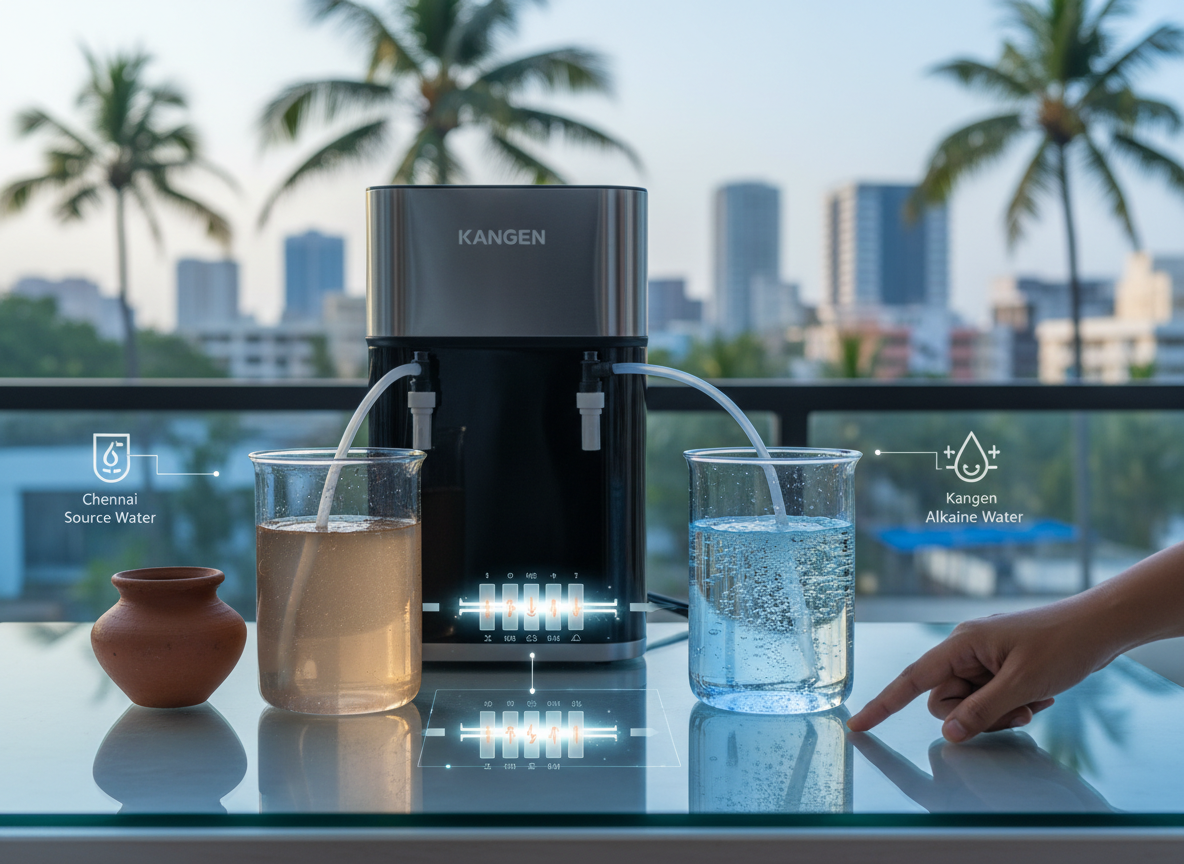
The Kangen Water electrolysis process fundamentally alters Chennai's tap water by separating it into alkaline and acidic streams, yielding water with different pH levels. This transformation occurs within the machine's electrolysis chamber, where platinum-coated titanium plates apply an electrical current to the filtered water. For residents in areas like Kodambakkam or Adyar, who often deal with varying municipal water quality, this process is particularly relevant. The machines produce several types of water, including strong Kangen Water (pH 11.0), Kangen Water for drinking (pH 8.5–9.5), Neutral Water (pH 7.0), Beauty Water (pH 4.0–6.0), and Strong Acidic Water (pH 2.5). Each type is designed for specific applications, from hydrating the body to sanitizing surfaces, directly addressing the diverse needs of a Chennai household.
The Fundamentals of Electrolysis in Kangen Machines
At its core, the electrolysis process in a Kangen Water machine involves passing pre-filtered water through an electrolysis cell. This cell contains multiple platinum-coated titanium plates that are electrically charged. When water flows over these plates, the electrical current causes a chemical reaction, splitting the H₂O molecules into H+ (hydrogen ions) and OH- (hydroxide ions). Simultaneously, dissolved minerals present in Chennai's water, such as calcium, magnesium, potassium, and sodium, are attracted to either the positive or negative electrodes. This separation creates two distinct streams: one rich in hydroxide ions and alkaline minerals, resulting in alkaline water, and the other rich in hydrogen ions and acidic minerals, producing acidic water. The efficiency of this process is influenced by the mineral content of the source water, which can vary significantly across different Chennai neighborhoods, from the coastal areas to those further inland like Tambaram.
Tailoring Kangen Water for Chennai's Water Profile
Chennai's water supply, sourced from reservoirs like Chembarambakkam and Poondi, as well as desalination plants, often presents a unique mineral composition and hardness. This local water profile directly impacts the effectiveness and output of a Kangen Water machine. For instance, water with higher mineral content, common in many parts of Chennai, tends to undergo electrolysis more efficiently, resulting in a clearer separation of pH levels. Conversely, if the water is very soft, the machine might require a calcium additive to achieve optimal results. Understanding these local nuances is key to maximizing the benefits of your Kangen Water machine. Our experience in areas from Anna Nagar to Velachery has shown that while the core electrolysis process remains constant, the initial water quality dictates the final output. Regular cleaning of the electrolysis plates, a process known as E-Cleaning, is also crucial to maintain performance, especially with Chennai's water that can sometimes leave mineral deposits.
Understanding pH Levels and Their Applications
The beauty of the Kangen Water system lies in its ability to produce water with a range of pH levels, each suited for a specific purpose. For daily consumption, Kangen Water with a pH of 8.5–9.5 is recommended. This alkaline water is believed to be beneficial for hydration and overall well-being. Neutral Water (pH 7.0) is ideal for preparing baby formula or taking medications, as it doesn't interfere with their properties. Beauty Water (pH 4.0–6.0), slightly acidic, is excellent for skincare and hair, acting as a natural astringent. Strong Acidic Water (pH 2.5) is a powerful disinfectant, useful for cleaning kitchen surfaces or sanitizing hands, a practical benefit in a bustling city like Chennai. On the other end of the spectrum, Strong Kangen Water (pH 11.0) is effective for cleaning produce and removing oil-based pesticides. The versatility offered by a Kangen Water ionizer makes it a valuable addition to any home in the Chennai area.
Maintenance and Optimizing Performance in Chennai
To ensure your Kangen Water machine consistently performs optimally with Chennai's water, proper maintenance is essential. The primary maintenance tasks include regular filter replacement and periodic E-Cleaning of the electrolysis plates. Chennai's water can sometimes contain sediment or dissolved solids that, while filtered out, can eventually affect the machine's internal components. The pre-filter in a Kangen machine typically lasts for about 6,000 liters or approximately 6 months, though this can vary based on your household's water usage and the quality of the incoming water supply. E-Cleaning, which involves running a citric acid solution through the machine, helps remove mineral buildup on the electrolysis plates, ensuring efficient ion separation. Neglecting these maintenance steps can lead to reduced performance and a decrease in the machine's ability to produce the desired pH levels. For more detailed guidance, our article on Troubleshooting Common Kangen Water Machine Issues in Chennai Homes provides useful insights.
The Role of Water Quality in Electrolysis Efficiency
The initial quality of the tap water in Chennai plays a significant role in the overall efficiency and effectiveness of the Kangen Water electrolysis process. Water sources in different parts of the city, from the metropolitan areas to the outskirts, can have varying levels of total dissolved solids (TDS), hardness, and even chlorine. While the Kangen machine's internal filter is designed to remove chlorine, rust, and other impurities, the mineral content directly influences the conductivity of the water during electrolysis. Higher mineral content generally leads to more robust ion separation and a wider range of pH outputs. Conversely, very soft water might require the addition of an electrolysis enhancer to achieve the strong acidic and strong alkaline waters. This is a common consideration for homeowners in localities like Mylapore or Besant Nagar, where water characteristics can sometimes differ from other parts of the Chennai area. Understanding these factors helps in setting realistic expectations for your machine's performance.